
Why Operators Bypass Alarms and Why Blaming Them Is Lazy Engineering

In an industrial filtration system, alarms protect equipment, maintain process stability, and reduce the risk of unplanned downtime. A differential pressure alarm should give operators time to respond before contamination, equipment stress, or reduced filtration efficiency affects the process. In reality, repeated alarms often lose authority. When the same differential pressure alarm appears too frequently without creating any visible downstream consequence, operators gradually stop treating it as urgent. What should serve as a safeguard turns into routine background noise, and that shift drives alarm fatigue.
Why a Differential Pressure Alarm Gets Ignored
Operators rarely bypass alarms without reason. In many cases, the system teaches them that the signal does not reflect a real operational threat. If a differential pressure alarm appears every week while production continues and no immediate failure follows, the signal quickly loses credibility. In industrial filtration, this pattern often points to a design issue rather than a behavior issue. Engineers may size filters against the wrong flow rate, copy alarm thresholds from generic specifications, or rely on assumptions that do not match actual contaminant loading. When engineers overlook filter life, dirt-holding capacity, and process variability, alarms appear more often even though the system has not yet reached a meaningful risk level. Teams should therefore review alarm behavior together with the wider industrial filtration system, not isolate it as an operator problem.
How a Differential Pressure Alarm Should Reflect Real Risk
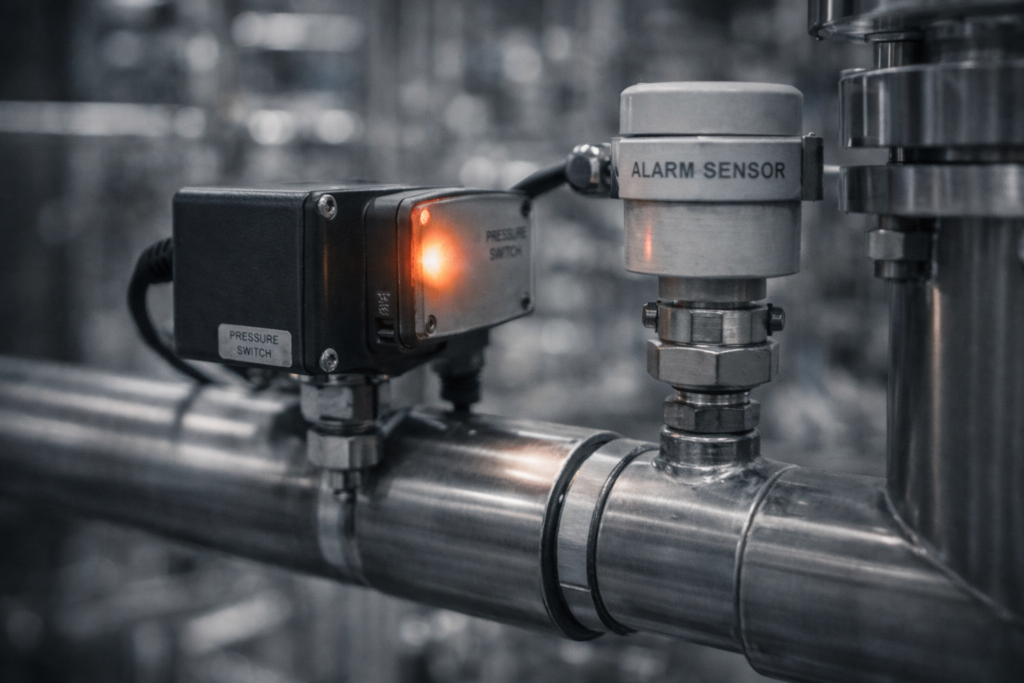
A well-designed filtration system makes alarms meaningful instead of inevitable. Pressure drop does not rise on its own. Filter media structure, available surface area, contaminant concentration, particle morphology, and operating variability all shape its behavior across the process. If a filter element is undersized, or if the system runs at excessive velocity, differential pressure rises prematurely. If engineers set the alarm threshold too conservatively, the warning activates long before the system faces a real threat. In both cases, the root issue does not lie in operator discipline alone. The problem begins when engineers select the industrial filter without matching it to the actual process demand. Once alarms appear too often, the plant normalizes them, and operators adjust their response accordingly.
The more useful question, therefore, is not who ignored the alarm, but why the system made ignoring it seem reasonable. Engineering integrity determines whether operators trust alarms or ignore them. When alarm thresholds match real process conditions, operators respond because they know the signal matters. When thresholds drift away from actual risk, warnings turn into noise and reliability declines over time. If repeated alarms have become routine in your industrial filtration system, your team should review filter sizing, flow rate, pressure drop, and the overall filtration solution in use. Strong alarm philosophy must reflect real process conditions and follow recognized alarm management practice.