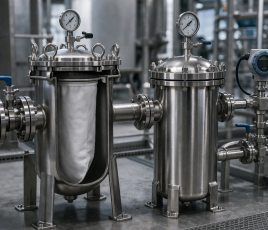

Stop asking for micron rating first. Ask this instead

In industrial filtration, micron rating is often the first specification people ask for when a system underperforms. The assumption seems logical: if the fluid is not clean enough, the solution must be a smaller micron size. But this narrow focus often leads to premature blockage, poor filter life, and inefficient system performance. A micron rating is only a physical dimension. It does not explain capture efficiency, surge-flow handling, or how much contaminant the media can hold before the system reaches bypass or terminal pressure drop. To improve process reliability, engineers need to stop treating filtration as a simple sizing exercise and start evaluating how the filter performs under real operating conditions.
Why Micron Rating Does Not Tell the Full Story
A “10-micron” filter from one manufacturer may perform very differently from a “10-micron” filter from another. That is why micron rating alone can be misleading. Without Beta Ratio, the number provides very little insight into actual filtration efficiency. A nominal 10-micron filter may capture only part of the contaminants at that size, allowing damaging particles to continue circulating through pumps, valves, and other sensitive equipment. In real industrial systems, contaminants are rarely uniform. They may be irregular, soft, gelatinous, or highly abrasive, and each behaves differently across filter media. Engineers should therefore evaluate filtration efficiency and contaminant morphology together rather than relying on micron size alone. This is also why good filter selection should begin with the wider industrial filtration system and the actual process requirement, not just a number on the specification sheet.
Why Dirt-Holding Capacity Matters More in Real Operation
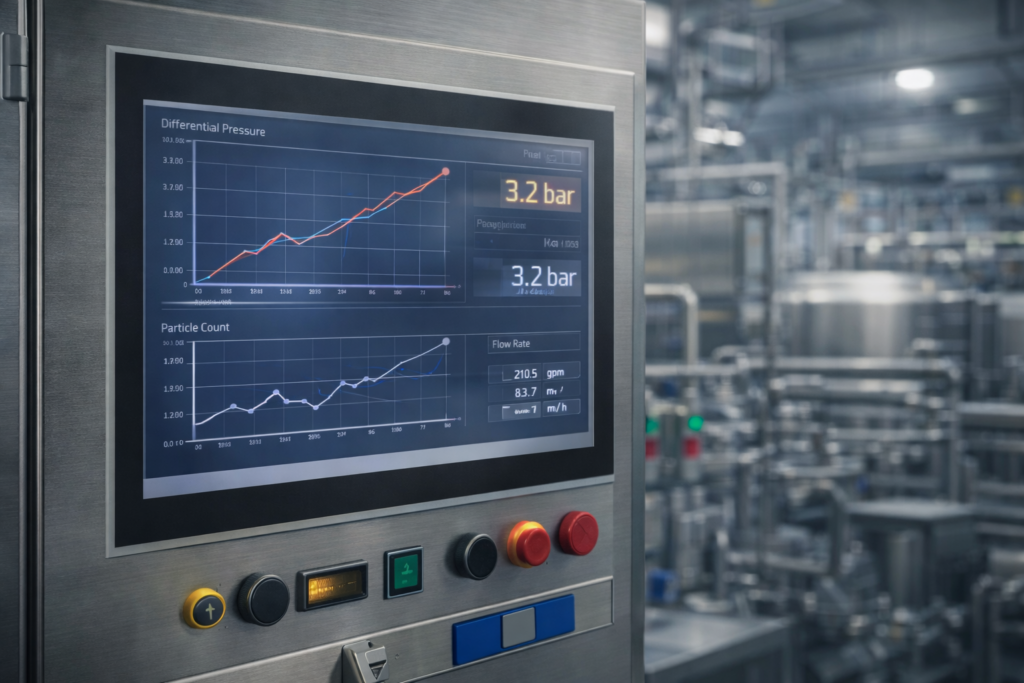
Instead of asking only for a micron rating, engineers should ask how much contaminant the filter can hold before reaching terminal differential pressure. That question shifts the focus toward dirt-holding capacity and real service life. When engineers understand the contaminant loading profile, system flux, and efficiency curve, they can match the filter to the actual lifecycle of the fluid. This approach improves performance while reducing unnecessary changeouts and protecting downstream components from gradual wear. A smaller micron rating does not automatically mean a better filter. In many cases, it simply creates a tighter restriction that may not suit the actual flow rate or dirt load of the process. Strong filtration design depends on the math behind performance, not just the smallest number on the box.
[Internal link suggestion: filter sizing / differential pressure article]
Ultimately, filtration protects process integrity, not just specification compliance. By moving beyond the micron rating myth and focusing on capture efficiency, Beta Ratio, and dirt-holding capacity, engineers can make better filter decisions and improve long-term reliability. If your plant is still selecting filters based mainly on micron size, it may be time to review the actual loading conditions, service intervals, and filtration goals across the system. For a broader technical reference on liquid filtration principles and filter media performance, engineers should also consider recognized filtration guidance.