

This Project Didn’t Need a Better Filter. It Needed a Better Question.
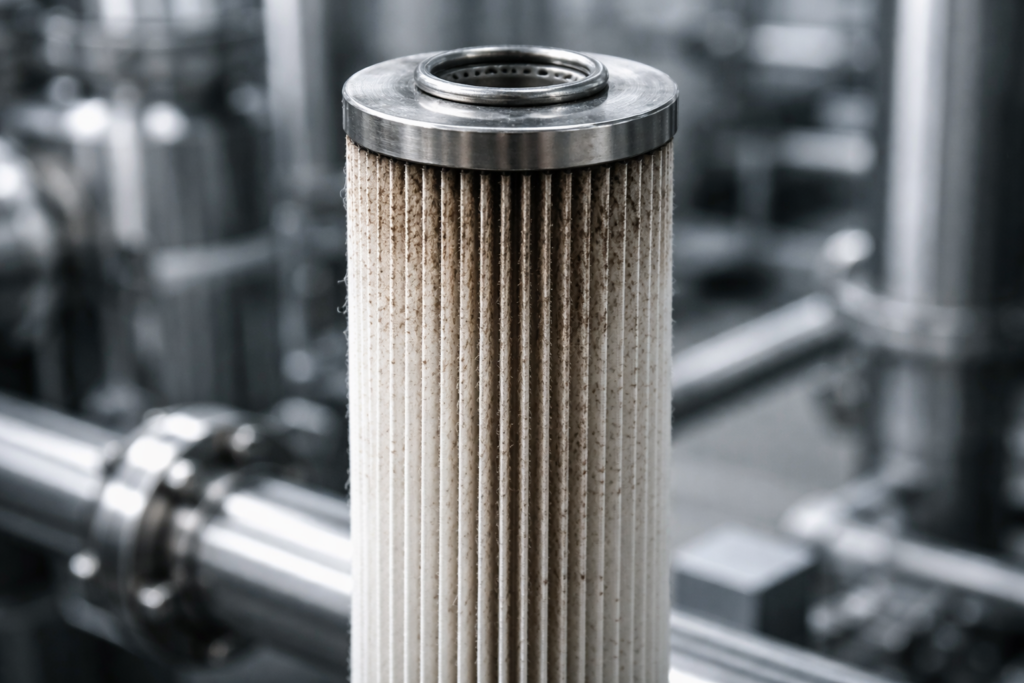
In many plants, the filter selection process still begins with a familiar reaction: contamination appears downstream, and the team immediately asks for a tighter micron rating. On paper, that response seems logical. If particles are getting through, the existing filter must be inadequate, and a smaller micron size should improve protection. In practice, that assumption often increases operating cost without solving the real problem. A tighter filter can raise pressure drop, shorten service life, and accelerate fouling if the surrounding system conditions remain unchanged.
Why the Filter Selection Process Often Starts with the Wrong Assumption
Before changing the filter, the more important question is this: what is the system actually trying to protect? In many industrial environments, teams identify contamination downstream but never clearly define the sensitivity of the equipment, process, or fluid circuit involved. As a result, the request becomes reaction-based rather than outcome-based. In many cases, the filter selection process starts with a reaction instead of a clearly defined performance objective. Procurement logic then drives the next step: tighter micron rating, higher efficiency, and a more restrictive element. However, industrial filtration does not work in isolation. Filter performance also depends on flow velocity, contaminant type, loading distribution, housing geometry, upstream pre-filtration, and the wider filtration system supporting the process.
Better Diagnosis Leads to a Better Filter Selection Process

In this project, the root cause was not the selected media. The system was operating at a flow rate that exceeded the designed surface capacity of the element, which created uneven media loading and accelerated fouling. At the same time, weak pre-filtration increased the contaminant burden and caused differential pressure to fluctuate beyond stable operating conditions. Under those conditions, the filter did exactly what it was designed to do, but the surrounding system did not support stable performance. If the plant had simply moved to a tighter micron rating, the result would have been a more restrictive filter, higher pressure drop, and shorter element life without removing the actual vulnerability.
A strong filter selection process begins with diagnosis, not escalation. Engineers should not start with the question, “Which filter should we buy next?” They should start with, “What failure mode are we trying to prevent?” That shift changes the outcome from incremental cost to system reliability. Good filtration decisions should always be anchored in performance outcomes such as cleanliness requirement, contaminant morphology, flux control, and differential pressure stability. Without that context, micron size becomes a cosmetic adjustment rather than a real solution. In many projects, the system does not need a better filter. It needs a better question.