
The Hidden Risk of Undersized Filtration Systems: Why Performance Declines Before Failure Occurs
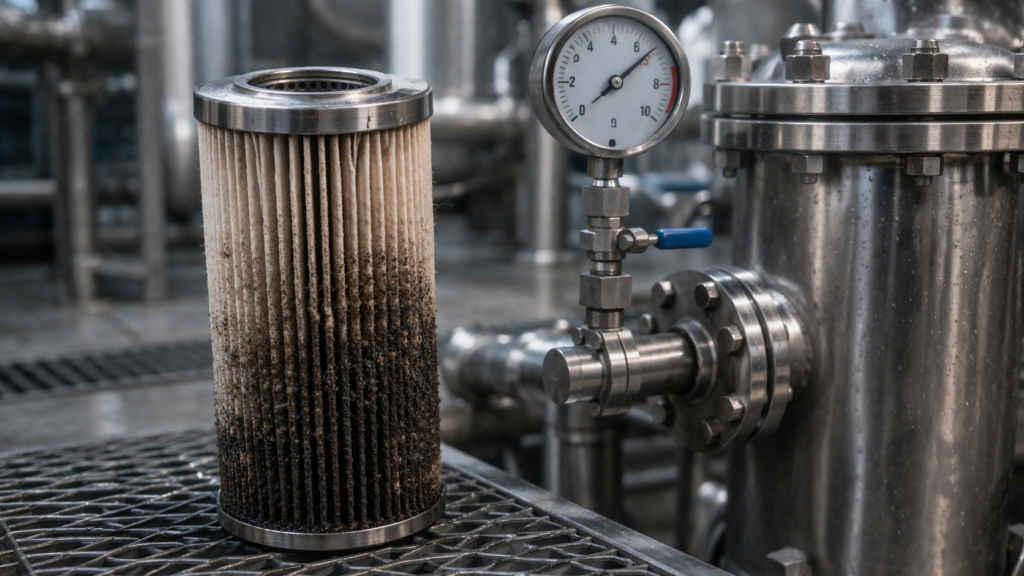
In industrial liquid filtration, teams often associate failure with visible damage such as ruptured media, collapsed elements, or sudden pressure spikes. In practice, many of the most expensive filtration problems do not appear as dramatic breakdowns. They develop as gradual instability. When filter sizing does not match the actual system demand, the filter continues operating under sustained stress conditions that slowly reduce efficiency, increase operating cost, and expose downstream equipment to unnecessary risk. Because the system continues to run, the underlying design issue often goes unnoticed until performance has already declined.
Why Poor Filter Sizing Creates Hidden Performance Loss
Poor filter sizing occurs when the required system flow rate exceeds the effective surface area capacity of the selected media.
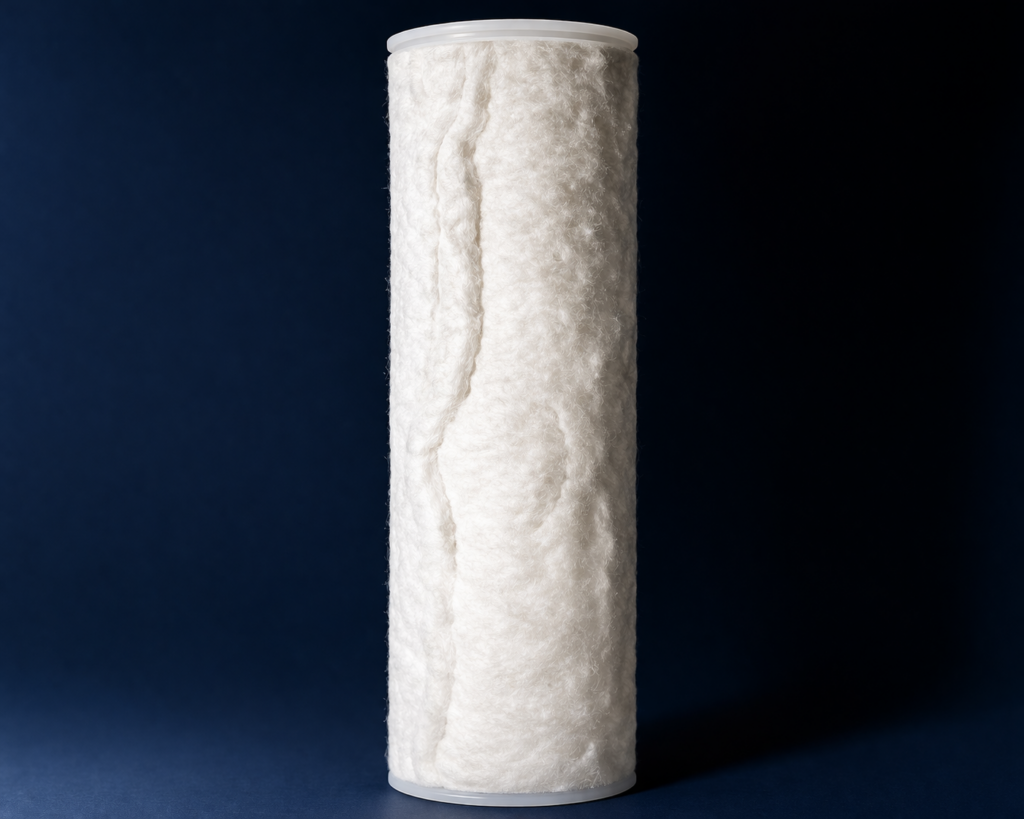
Filter performance declines when system demand exceeds the media’s effective operating envelope.
This drives flux rate higher than the system can sustain and pushes the filter outside its stable operating range. As flux increases, particle embedding accelerates, differential pressure rises more quickly, media loading becomes uneven, and dirt-holding capacity declines. These effects do not stop production immediately, but they steadily create inefficiency. A system may appear operational while the pump works harder, pressure fluctuations become more frequent, and replacement intervals shorten. In that situation, the plant does not see a clear failure event. It sees rising cost and declining stability.
Why Reactive Replacement Does Not Solve Undersizing
A common response to premature loading is to change elements more often or move to a tighter micron rating. While that may temporarily reduce contamination downstream, it does not solve the surface area deficiency created by poor filter sizing. In many cases, tighter media under high-flux conditions only increases pressure drop, reduces element life further, and adds maintenance labor and inventory cost. Over time, the accumulated expense of reactive replacement and increased energy use can exceed the cost of moving to a properly sized filtration configuration. The real danger is not visible breakdown. It is long-term inefficiency that quietly becomes part of daily operations.
A well-engineered filtration system should operate within a sustainable flux range that supports stable performance throughout the filter’s service life. To evaluate whether the system is correctly sized, engineers should look beyond whether the filter is still functioning and examine how it is functioning. Trends in differential pressure, actual flow rate against design specification, element lifespan, cleanliness consistency, and pump load all provide clues about chronic undersizing. Reliability should not be defined by whether the filter survives. It should be defined by whether the system can maintain stable performance without operating permanently at its stress limit.
If your plant is experiencing recurring loading issues, elevated pressure drop, or declining filter life, KETCO can help assess whether filter sizing and system conditions are aligned. Contact us at sales@filter.com.my for a free filtration audit.