
Before Choosing a Filter, Answer These 5 Process Questions
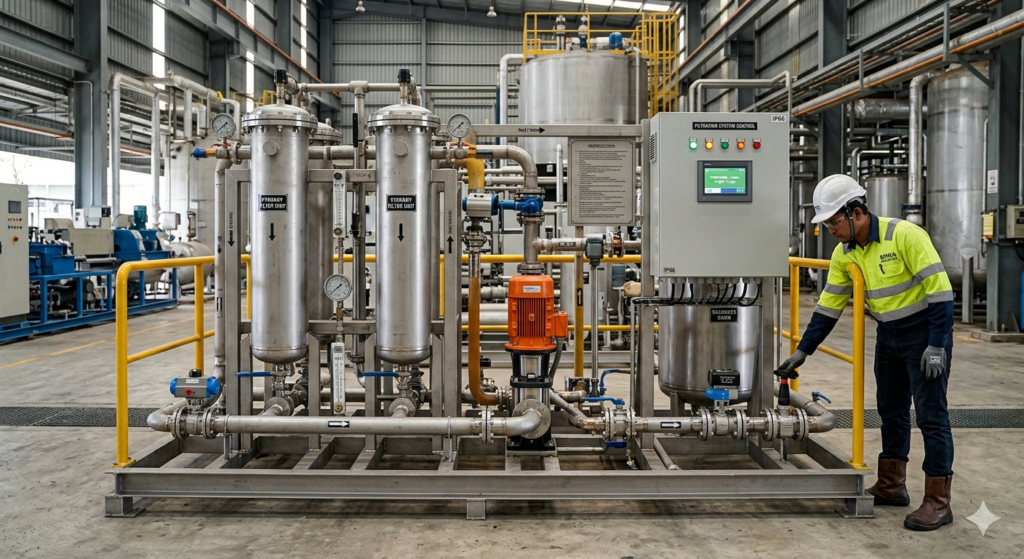
Choosing a filter should not begin with micron rating, unit price, or what was used before. In many industrial systems, poor filtration decisions happen because the wrong question is asked at the start. The filter is treated as a product choice, while the real issue is process alignment. A better selection process begins by understanding what the system needs the filter to do, how the process behaves, and what conditions shape actual performance over time.
Choosing a Filter Starts with the Process, Not the Product
Many filtration discussions begin too late in the logic. Teams compare media type, housing size, or replacement cost before they define the role of the filter in the system. But no filter performs in isolation. Its behaviour depends on flow condition, solids loading, contaminant type, system duty, and the level of downstream protection required.
That is why filter selection should start with process questions, not product assumptions. A filter that looks suitable on paper may still perform poorly if it is solving the wrong problem.
The 5 Process Questions That Should Come First
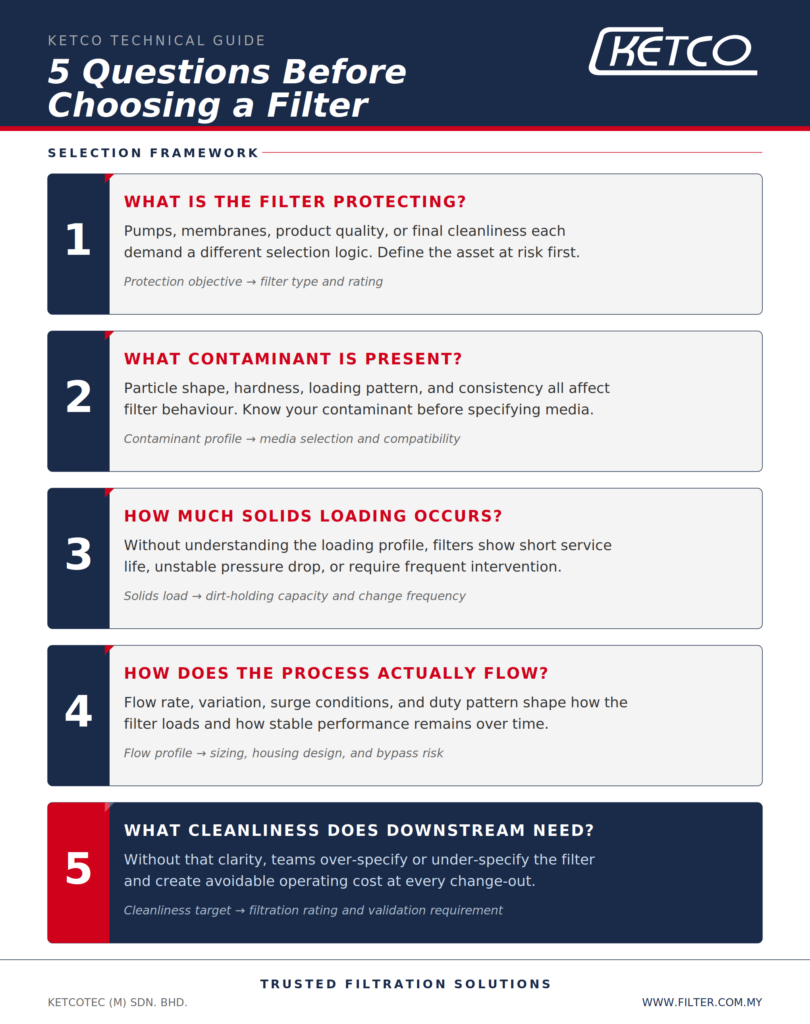
Before choosing a filter, five questions should guide the discussion. The first is what the filter is actually protecting. A system designed to protect pumps, membranes, product quality, or final cleanliness will not use the same selection logic. The second is what type of contaminant is present. Particle shape, hardness, loading pattern, and consistency all affect how the filter behaves in operation. The third is how much solids loading the system really sees. A filter selected without understanding loading profile may show short life, unstable pressure drop, or frequent intervention. The fourth is how the process flows in real operation. Flow rate, variation, surge conditions, and duty pattern shape how the filter loads and how stable performance remains. The fifth is what level of cleanliness the downstream process actually requires. Without that clarity, teams often over-specify or under-specify the filter and create avoidable operating cost.
Better Filter Selection Comes from Better Early Questions
When these five questions are answered first, filter selection becomes more structured and more defensible. Teams can assess media suitability, housing design, change-out logic, and filtration stage with a clearer technical basis. This reduces the risk of reactive purchasing, repeated troubleshooting, and filtration decisions that look correct at procurement level but fail in operation.
Good filtration performance starts before the product is chosen. It starts when the process is understood well enough to define what the filter must actually do.
If you want a clearer basis for choosing a filter in your process, KETCO can help assess system duty, contaminant profile, and performance requirements before product selection begins. Contact us at sales@filter.com.my for a free filtration audit.